


Unfortunately, vascular pathologies have a global status.People of different ages and genders are susceptible to them.Various reasons can contribute to the development of varicose veins of the lower extremities, and there are quite a few of them.Therefore, statistics on the registration of vascular diseases are inevitably increasing.At the same time, science and medicine do not stand still, and the number of treatment methods already presents an impressive list.
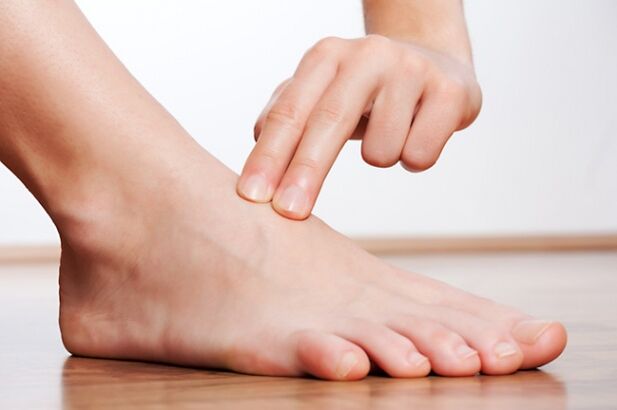
The choice of the therapeutic regimen remains with the attending physician.Its selection is determined by the stage at which the vascular pathology is detected, the dynamics of the disease, the general health of the patient and other factors.At his discretion, the specialist can include conservative, surgical methods or their symbiosis in the treatment regimen.
Conservative methods include drug and non-drug therapy.These treatment methods can be the only ones in the initial stage of the disease, when its first signs appear, and in 100% of cases they are an addition to surgical methods.
Expert opinion
Surgical methods are used for advanced forms of vascular pathology.Surgical methods are divided into invasive and minimally invasive.All of them have indications and contraindications, as well as their pros and cons.
One of the most popular modern therapeutic methods is the EVLT procedure (endovasal laser coagulation) of the veins of the lower extremities.It is difficult for an untrained person to understand medical terms.Therefore, the question arises: what is it and what is it for?
EVLT of lower extremity veins: preparation, procedure technique, indications and contraindications
What is EVLT treatment for varicose veins?Endovascular or endovenous laser coagulation of the veins of the lower extremities (EVLC) is a minimally invasive process for the elimination of varicose veins.
How is endovasal laser coagulation of varicose veins performed?This method has been practiced for about ten years, so the procedure has been improved to date.EVLT is characterized as a high-tech and quite complex manipulation that requires not only high-quality equipment, but especially high professional training of medical personnel.
This is a percutaneous intravascular surgical procedure.This means that laser coagulation of varicose veins in the legs involves the insertion of a peripheral catheter into the venous bed.Through which a thin laser light guide penetrates to cauterize the veins.Under its influence, a thermal burn occurs and the subsequent adhesion of the venous wall with the disappearance of the lumen.The procedure will be performed with local anesthesia (low-concentration anesthetic mixture), its effect is expected to last 6-10 hours.Thanks to the addition of vasoconstrictors to the mixture, in addition to the anesthetic effect, a vasoconstrictor is also achieved.This reduces the risk of hematoma formation after EVLT.
All stages of EVLT are performed using duplex scanning.
Thus, the specialist controls the laser and its position in the vein.Regardless of the prior marking of the veins, the laser treatment of varicose veins takes about 40 minutes.If necessary, sclerotherapy or miniphlebectomy of large varicose branches of the great and small saphenous veins is performed the next day.This is because endovasal laser coagulation has limitations in the allowed dilation of the varicose branches of the great saphenous vein (GSV) and the small saphenous vein.In order for the procedure to be effective, the veins must have an expansion of up to 25 mm in diameter.Therefore, if after EVLT treatment some veins remain visible, there is no need to worry.They can be eliminated by inserting sclerosant into the venous orifice or making a bur, then pulling the vein out and physically removing it.As the research results show, in such cases, in the post-operative period, there is a good clinical and stable cosmetic effect, without signs of relapse.Moreover, in general, the social rehabilitation of patients is accelerated (if medical recommendations are followed immediately after the operation).
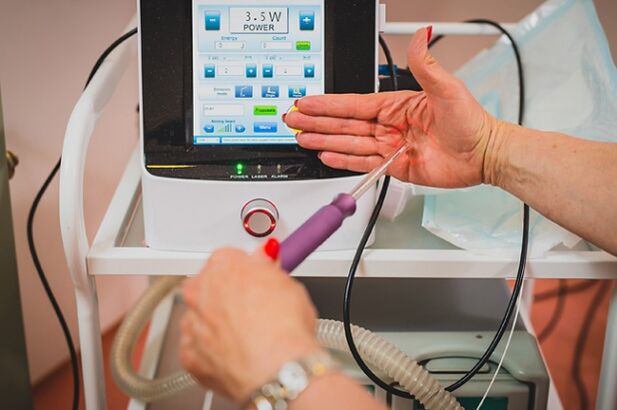
Laser coagulation of blood vessels in the leg: preparatory phase
What is the preparation for coagulation?Preparation is not difficult.In order to perform endovascular laser coagulation of the veins of the lower limbs, it is required:
- general examination of the patient's state of health (general clinical blood and urine tests, blood test for RW, comprehensive analysis of blood coagulation indicators, blood tests for viral hepatitis B and C, AIDS, HIV and syphilis);
- examination of veins and blood vessels (USDS);
- conclusion from the therapist about the absence of contraindications.
It is necessary to prepare medical compression stockings in advance.
You will need it immediately after laser varicose vein treatment (EVLT).As a rule, the doctor prescribes knitted garments of class II compression for this purpose.
EVLT of lower extremity veins: indications and contraindications
If laser coagulation of blood vessels in the leg is prescribed, then the indications are few: the presence of varicose veins (starting from stage 2 according to CEAP), trophic disorders of the lower part of the leg, straight veins.
Removing veins in this way also has a number of contraindications:
- excess body weight (obesity);
- diseases of the arteries of the lower extremities, accompanied by the formation of atherosclerotic plaques on the inner walls of blood vessels;
- limited movement of the patient due to diseases of the musculoskeletal system, stroke, etc.;
- infectious diseases;
- inflammatory processes of the skin and subcutaneous tissue;
- hypertension in the acute phase;
- some chronic diseases in the acute phase.
Is it possible to do EVLT if there is a blood clot?A prerequisite for the operation is the absence of blood clots in the upper segment of the trunk of the saphenous vein.Therefore, the presence of blood clots is also a contraindication.
Is venous laser coagulation allowed during pregnancy and until when?
Expert opinion
EVLT operation during pregnancy and after birth, during lactation, is prohibited.Non-drug methods of conservative therapy are recommended for pregnant and lactating women, because... it is necessary to exclude all possible risks for intrauterine development and the health of the already born child.
Rehabilitation after laser coagulation of lower extremity veins
Those who have been prescribed EVLT (subcutaneous laser coagulation) of the veins of the lower extremities are wondering if it is necessary to open a sick leave certificate?To eliminate varicose veins using this method, it is not necessary to stay in the hospital for a long time.The procedure is performed on an outpatient basis and does not require bed rest.You can return to your normal lifestyle and work responsibilities the next day.The only thing that will take time is rehabilitation.Recovery after EVLT of the veins can take a maximum of one and a half months.During this period of time, it is important to responsibly follow all the recommendations received from the attending physician.
Daily routine after the procedure
The daily routine in the postoperative period requires regularity.A proper balance between waking and sleeping, activity and rest, as well as food intake, health procedures, etc.To help the body recover and reduce the risk of relapse, it is necessary to make some lifestyle adjustments.The daily routine and routine will have to be approached to some extent by observing the rules of a healthy lifestyle.
What should you not do after the procedure?
There are some contraindications and restrictions after the procedure for removing varicose veins.First of all, you need to get rid of bad habits.Alcohol and smoking after laser coagulation are prohibited, at least for the rehabilitation period.Food should also be balanced and appropriate to control weight.
For several weeks after EVLT, you should avoid taking hot baths, as well as visits to baths, saunas and swimming pools.
Tanning salons, loved by the fair sex, and body care procedures in beauty salons are prohibited.Women will also need to change their high heels to more comfortable shoes with low, stable heels.

Exercise after the procedure
Fearing complications and relapse, some patients wonder if sports and running are allowed after EVLT?Let's start with the fact that after laser coagulation of veins and miniphlebectomy, you should immediately start moving, this will reduce the risk of blood clots.Starting from the day after the operation, the daily walk should last at least 1.5-2 hours.There is one feature - during the first days, the patient must stay in compression stockings around the clock.Further, the wearing of medical underwear is provided only during the day and for a period of up to six months, then the doctor will choose the compression class of knitted garments during a re-examination.
Sports are allowed and even necessary!But not all its types are acceptable during the rehabilitation period.It is important to exclude significant physical activities, such as lifting weights, strength training in gyms, etc.Is it possible to run after laser coagulation of veins?Experts discourage sprinting as a form of shock loading.These also include jumping and crunching.Such loads after surgery are extremely undesirable.
Complications after EVLT
Like any other operation, laser coagulation of the veins of the lower extremities has possible complications.Adverse effects of laser coagulation in the postoperative period are rare, and some are even extremely rare (1:10,000).Therefore, the method is considered to be more effective.However, it is necessary to be aware of the following complications after EVLT surgery:
- thrombophlebitis;
- deep vein thrombosis;
- pulmonary embolism;
- burns;
- paresthesia;
- hyperthermia.
Is there normal pain after EVLT and how long does it last?What should you do if your leg is pulled and swelling appears?Which of the following can be considered a complication after EVLT?
Expert opinion
A large vein after coagulation forms a dense cord with redness.As a rule, such compression at the puncture site and redness occurs 7-10 days after endovascular laser coagulation (EVLC).This phenomenon is normal, but temporary.In addition, it quickly regresses when applied locally.
Some patients notice that their leg hurts and goes numb during the first two days after laser vein coagulation.These unpleasant sensations are related more to the unusual wearing of knitted medical garments than to the treatment procedure itself.There is rarely nagging pain and tension along the venous bed.They last no more than a month and a half and go away on their own.It is worth noting that on the first day, in response to the coagulation of the proteins of the blood vessel wall, a temperature not higher than 38°C may occur.After EVLT, the doctor will inform the patient about all possible complications and give recommendations on how to behave in a particular case.
Pregnancy after EVLT
EVLT of pregnancy veins cannot interfere with pregnancy in any way.On the contrary, when planning a pregnancy, the absolutely correct step would be to solve the problem of varicose veins.Therefore, to the question of whether laser coagulation should be done or not, the answer is clear.Because during pregnancy, the load on the vessels will increase, and the disease will worsen 100%.Pregnancy excludes surgical intervention.Only in difficult situations, when the situation is critical, the attending physician can prescribe a radical method of treating varicose veins to a pregnant woman.
When pregnancy occurs after EVLT, measures should be taken to prevent recurrence.
For this purpose, it is recommended to wear medical compression stockings, perform gymnastic exercises, self-massage the limbs and apply vein toning creams.A foot cream with extracts of chestnut and ginkgo biloba is ideal for its properties during pregnancy.Its composition is natural, which means that the product is safe for the health of the expectant mother and baby.